 Curis Domi
Hospital@home
Acute patients in a virtual bed, typically for around six weeks, with readings several times a day.
Readings over two weeks
Sized for 1,000 virtual beds
Curis Domi lets a hospital run virtual beds and remote follow-up in patients' own homes. Patients measure with an app, clinicians follow them in a web portal, and the medical backend runs on servers in your own country. The platform has no licence fees.
Curis domi is Latin for “with care, at home”.
In the armchair, the phone camera measures blood pressure and pulse. The reading is sent at 08:02.
A virtual bed. Hospital@home patients send readings through the day.
The medication plan reminds the patient of the next dose.
In the clinician portal, the patient above their limit moves to the top of the list.
Every reading follows the same four steps. Clinicians only see what needs their judgement.
Patients log readings in the app, type them in, or take blood pressure and pulse with the phone camera.
Readings reach the medical backend, where a rules engine checks each one against that patient's own limits.
Only clinically significant breaches raise an alert. Patients are sorted red, yellow, green, so staff are not buried in noise.
One click takes the clinician from the alert to a chat, a team thread or a video consultation, with the full record on screen.
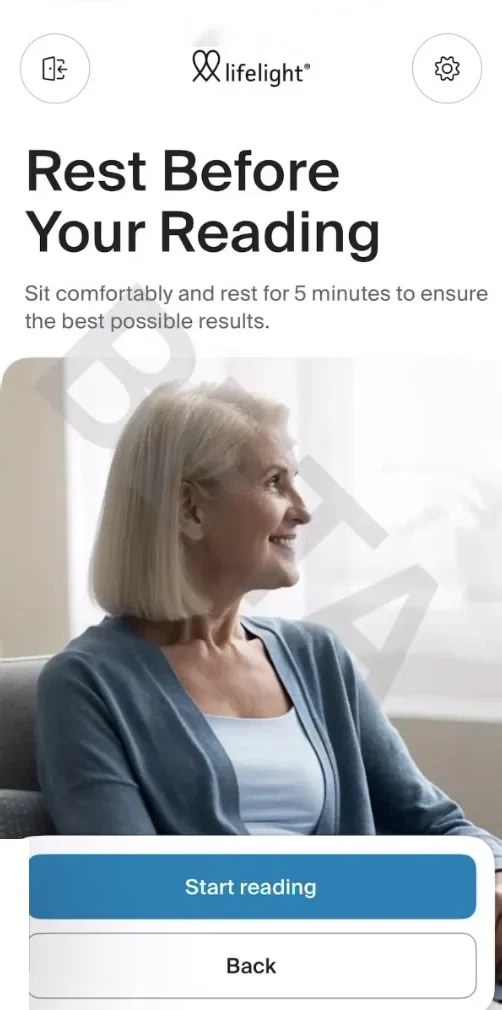
Rest for five minutes.
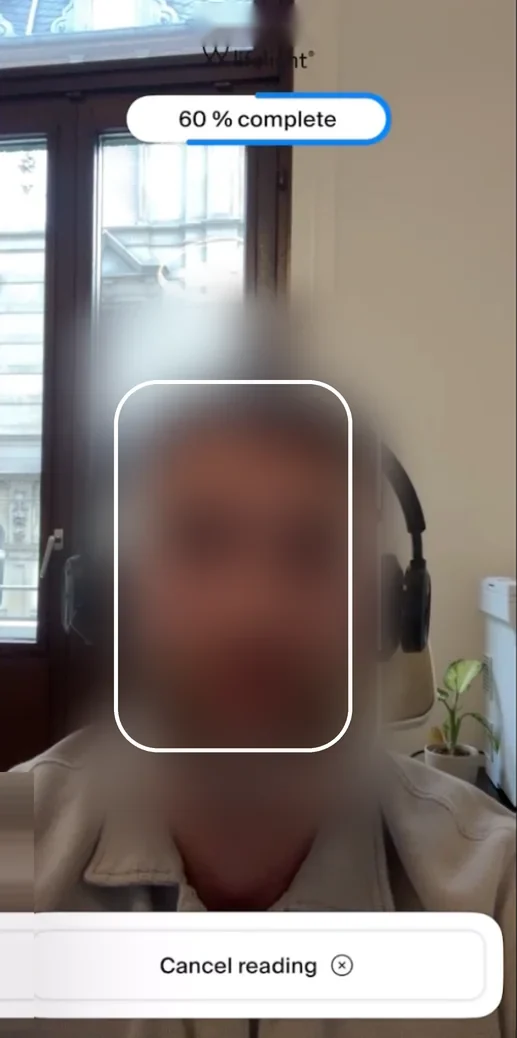
Look into the front camera while it reads.
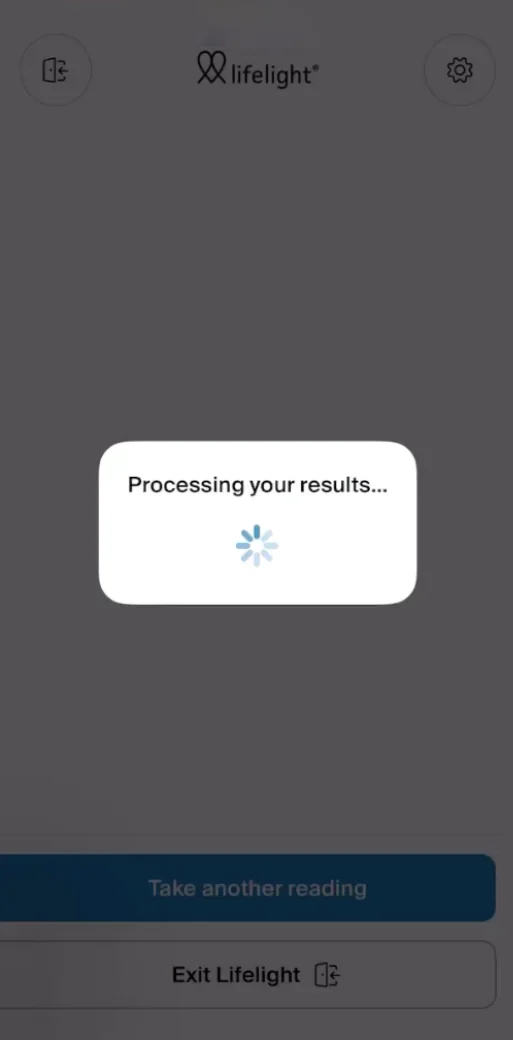
The result goes to the care team.
Curis Domi includes Lifelight®, a CE-marked medical device that reads blood pressure and pulse from a short video of the face. There is no cuff, and no hardware to buy, ship or charge.
| Device | Lifelight®, CE-marked medical device, class IIa |
|---|---|
| Measures | Blood pressure and pulse |
| Hardware | The patient's own smartphone |
| Transfer | Automatic, straight to the clinician dashboard |
| In development | Respiratory rate and oxygen saturation, not yet certified |
The same app, portal and backend run all three programmes. Start with one, prove it, then add the next.
Acute patients in a virtual bed, typically for around six weeks, with readings several times a day.
Readings over two weeks
Sized for 1,000 virtual beds
Lifelong follow-up for heart failure, hypertension, diabetes and other chronic conditions, with a few readings a week.
Readings over two weeks
Sized for 10,000 patients
Citizens at risk, checked now and then with their own phone. Low cost per person and very large reach.
Readings over two weeks
Sized for 1,000,000 citizens
You never pay a software licence per patient, per user or per site. A fixed monthly fee per installation covers support, maintenance and updates, so your costs stay level while your virtual hospital grows.
| Model | Public model | Private model |
|---|---|---|
| For | Ministries of health, public hospitals and NGOs | Hospital groups, care operators and insurers |
| Licence | None | None |
| Support | Four-year agreement at a flat monthly fee | Four-year agreement at a flat monthly fee |
| Ecosystem | Open ecosystem on an open-source cloud platform | Supported third-party development on open APIs |
| Also included | Training, education and managed services | Revenue share on services built on top |
Hosting and hardware are your own. Optional third-party components, such as Lifelight® camera readings, are priced separately.
Patients use the app on their phone. Clinicians work in the portal in any browser. Both read and write the same record.
Drawings with sample data.
Curis Domi runs on-premises or in an in-country cloud, on an open-source stack you can inspect. Nothing depends on a foreign hyperscaler.
Deployed in your data centre or a local cloud. Patient data does not cross the border.
HL7, FHIR and DICOM flow to existing EMR and HIS systems through standard integration engines.
Single sign-on for every user and an audit trail of who opened which record.
Built on an open-source stack with Kubernetes. No proprietary hypervisors and no vendor leverage over your data.
Built for ISO 13485, GDPR and HIPAA.
The platform was developed in Halle (Saale) by iMedCom GmbH with Martin-Luther-Universität Halle-Wittenberg, and tested with 75 heart-failure patients over 30 months at Universitätsklinikum Halle before its launch as Curis Domi. It supports heart failure, hypertension, diabetes, transplant aftercare and obesity.
Research group in Halle. The platform concept starts as a university workgroup.
iMedCom GmbH. Spun out as an independent company to build the platform.
DigitHal HF-Net. A federally funded (BMBF) heart-failure network with Universitätsklinikum Halle.
Curis Domi launches commercially for five indications.
Hospital pilot in Vietnam. The patient app is published on the App Store and Google Play.
Two decades of national e-health infrastructure, and a quarter century at the operating table.
Chief Executive Officer
Founder of eHealthBrains and a pioneer of e-health and virtual care in Denmark, with more than 20 years in health IT. Henrik was architect and lead negotiator for sundhed.dk, Denmark's national health portal, and contributed to the National Service Platform. He founded OpenTeleHealth, an ISO 13485 and CE-marked telemedicine company, led international business development at Doccla and has consulted for the WHO.
LinkedIn profileChief Medical Officer
Cardiac surgeon with more than 25 years in the specialty and over 4,000 operations. He trained at Martin-Luther-Universität Halle-Wittenberg. As managing senior consultant for cardiac surgery at Universitätsmedizin Rostock, he led programmes in heart-failure therapy with mechanical support systems and in telemedicine, and he co-founded central Germany's first mobile ECMO unit. In 2025 he was appointed head of cardiac surgery at the Herz-Kreislauf-Zentrum Rotenburg.
A live walkthrough of the patient app and the clinician portal, then a conversation about your patients, your systems and your rules. Most hospitals start with a pilot of 20 to 30 patients; pilot to production usually takes 9 to 12 months.
© 2026 CurisDomi GmbH. Lifelight® is a trademark of its owner.